Settings
 Help
Help '%3e%3cpath%20d='M17.0891%200.00063938H11.0694C10.2409%200.00063938%209.56937%200.672212%209.56937%201.50064C9.56937%202.32907%2010.2409%203.00064%2011.0694%203.00064H17.0891C17.7159%202.98938%2018.3216%203.22703%2018.7735%203.66151C19.2254%204.09599%2019.4867%204.69188%2019.5001%205.31864V18.6826C19.4867%2019.3094%2019.2254%2019.9053%2018.7735%2020.3398C18.3216%2020.7743%2017.7159%2021.0119%2017.0891%2021.0006H5.41107C4.58264%2021.0006%203.91107%2021.6722%203.91107%2022.5006C3.91107%2023.3291%204.58265%2024.0006%205.41107%2024.0006H17.0891C18.5113%2024.0113%2019.8797%2023.4574%2020.8941%2022.4604C21.9085%2021.4635%2022.4861%2020.1049%2022.5001%2018.6826V5.31864C22.4861%203.89641%2021.9085%202.5378%2020.8941%201.54084C19.8797%200.543881%2018.5113%20-0.0100219%2017.0891%200.00063938Z'%20fill='%23FB3748'/%3e%3cpath%20d='M2%2011.9993C2%2012.3971%202.15804%2012.7786%202.43934%2013.0599C2.72064%2013.3412%203.10218%2013.4993%203.5%2013.4993L13.475%2013.4723L10.009%2016.9383C9.72761%2017.2195%209.56947%2017.6011%209.56937%2017.9989C9.56928%2018.3968%209.72724%2018.7784%2010.0085%2019.0598C10.2898%2019.3412%2010.6713%2019.4993%2011.0691%2019.4994C11.467%2019.4995%2011.8486%2019.3415%2012.13%2019.0603L16.716%2014.4743C17.041%2014.1493%2017.2989%2013.7634%2017.4748%2013.3388C17.6507%2012.9141%2017.7413%2012.4589%2017.7413%2011.9993C17.7413%2011.5396%2017.6507%2011.0845%2017.4748%2010.6598C17.2989%2010.2351%2017.041%209.84929%2016.716%209.52428L12.134%204.93828C11.9947%204.79901%2011.8293%204.68855%2011.6472%204.6132C11.4652%204.53786%2011.2701%204.4991%2011.0731%204.49915C10.8761%204.4992%2010.6811%204.53804%2010.4991%204.61347C10.3171%204.68891%2010.1518%204.79944%2010.0125%204.93878C9.73124%205.22017%209.57328%205.60177%209.57337%205.99963C9.57342%206.19663%209.61227%206.39169%209.6877%206.57368C9.76313%206.75566%209.87367%206.92101%2010.013%207.06028L13.426%2010.4723L3.5%2010.4993C3.10218%2010.4993%202.72064%2010.6573%202.43934%2010.9386C2.15804%2011.2199%202%2011.6015%202%2011.9993Z'%20fill='%23FB3748'/%3e%3c/g%3e%3c/svg%3e) Logout
Logout

Why Cyprus wants its robots to make mistakes — and what the WRO surprise rule tests on 19 September
When young competitors arrive at European University Cyprus on 19 September for the World Robot Olympiad national final, they will find the rules changed on them shortly before the start. Teams get only a limited window to rewrite their programming before sending their robots out again, and the field is rearranged between rounds so machines cannot simply memorise a route.
That is the point. The so-called surprise rule tests whether a robot can make decisions in real time rather than replay a rehearsed sequence — the same problem that separates a demo from a deployable machine. Robotex Cyprus made the scale of the local scene clear in June, drawing 709 competitors in 216 teams to the University of Cyprus Sports Centre.
The research side of the island is working on the same gap. At AUB Mediterraneo in Paphos, the Intelligent Robotics and Interaction Lab is building a €100,000 human-guided robotic arm for warehouse work, with augmented-reality intervention when a human needs to step in, alongside construction-site inspection robots including a Unitree Go2 robot dog. The KIOS Research and Innovation Center of Excellence at the University of Cyprus works on emergency response, using drones and sensors to map burned or flooded areas and inspect power lines. CYENS in Nicosia studies how machines acquire skills and reuse them, working with robot dogs and mechanical arms. The Cyprus Marine and Maritime Institute in Larnaca develops underwater vehicles and surface vessels for search-and-rescue and ocean research. Nicosia General Hospital has been running a robotic coffee-serving arm since July.
There is a counterintuitive finding underneath all of this: robots that make harmless mistakes can be more appealing to people, but trust collapses when a machine malfunctions in a role where expectations are high. A Drexel University study found the conversational robot Pepper lost more than half its influence after making errors. The lesson for anyone building for real deployment is that recovery matters as much as capability.
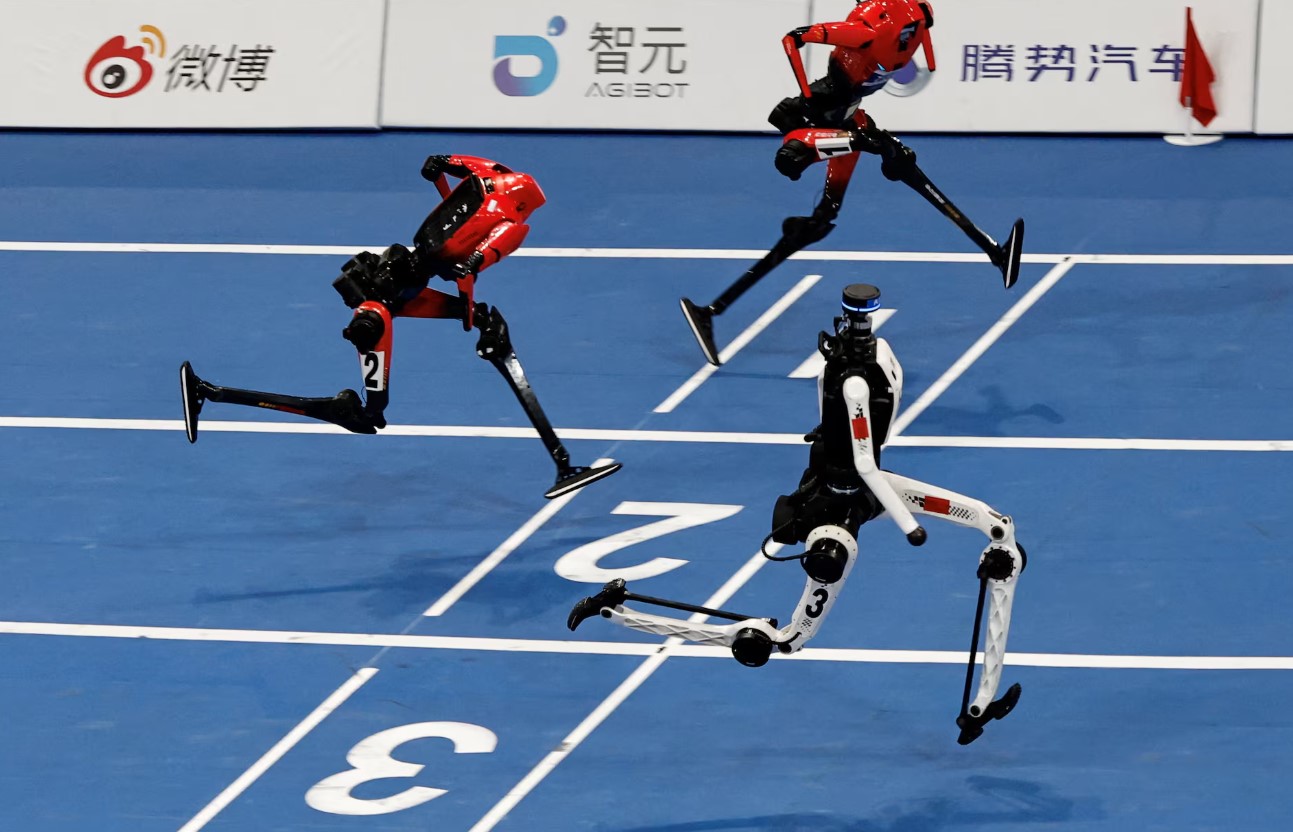
The competitive benchmark keeps moving in the meantime. At the World Humanoid Robot Games in Beijing in August, 2,056 robots took part, and the Tiangong Ultra humanoid covered 100 metres in 8.64 seconds — faster, on that measure, than Usain Bolt's 9.58-second world record.
The WRO Cyprus 2026 national final is organised by the Cyprus Computer Society and takes place on 19 September at European University Cyprus in Nicosia.
Source