Settings
 Help
 Logout


85 guides, no jargon: CYENS and Cyta build the unglamorous half of Cyprus' digital transition
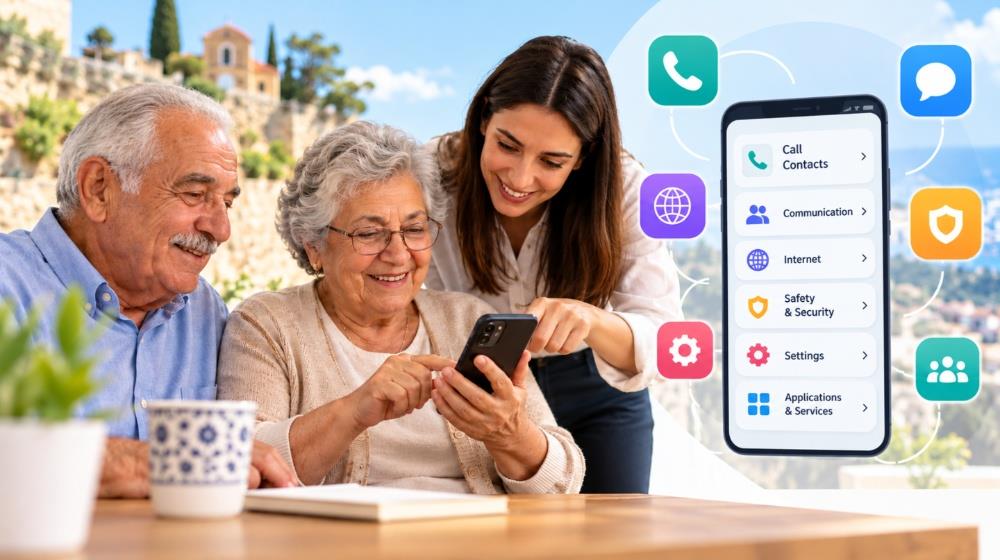
CYENS Centre of Excellence has launched Digital Kin, a free platform that does something a research centre is not usually asked to do: teach people to use a phone. It is aimed at older adults and people living in rural and remote areas of Cyprus, and it is built by the Extended Experiences (EX) Research Group under Prof. Fotis Liarokapis, in strategic collaboration with Cyta.
The content is more than 85 step-by-step guides across six learning areas — basic smartphone functions, communication, internet use, online safety, digital services and useful applications. The specifics are what make it credible: making a call and sending a message, but also the GeSY Beneficiary Portal, JCC Smart payments, and recognising online scams. Everything is in Greek, free, works on Android and iPhone, and each guide can be downloaded as a PDF for offline use — which matters if the person you are helping has patchy data or no confidence clicking around a live site. The platform is at digitalkin.cyens.org.cy.
Two things are worth pulling out. First, this is the second Cyta–CYENS product to surface this month, after the Greek-language AI model now handling calls in Cyta's contact centre. A telecom pairing its customer-facing automation with a research centre's accessibility work is a coherent strategy rather than two press releases: the same population that gets routed to an AI voice agent is the population that needs to be taught what to do when it fails.
Second, note what the deliverable actually is. A group whose research area is extended reality and interactive media shipped illustrated PDFs. That is the correct answer, and it is the answer most digital-inclusion projects avoid because it does not demo well. Cybersecurity awareness is woven through the material instead of being parked in a separate module, which is how it works in practice — the moment someone learns to pay a bill online is the moment they become worth phishing.
The honest gap in the announcement is distribution. A platform of guides is only as good as the number of people pointed at it, and nothing published says whether Citizen Service Centres, municipal libraries, GeSY personal doctors or Cyta's own retail staff will route people there. The material is the easy part; the referral path is the part that decides whether 85 guides get read 85 times or 85,000 times.
For anyone building in this space: the guide list is effectively a free, validated inventory of which digital services ordinary people in Cyprus actually cannot use unaided. That is a better problem-discovery document than most hackathon challenge briefs.
28 Sep 2026